Sleep
Bright light earlier in the day helps you feel tired at bedtime [3].
Bright light is the strongest signal regulating your circadian rhythm, the body’s internal clock. This influences how well you sleep, how you feel, and how alert you are throughout the day. Yet we spend on average 90% of our time indoors, in homes nowhere near bright enough to give us this signal.
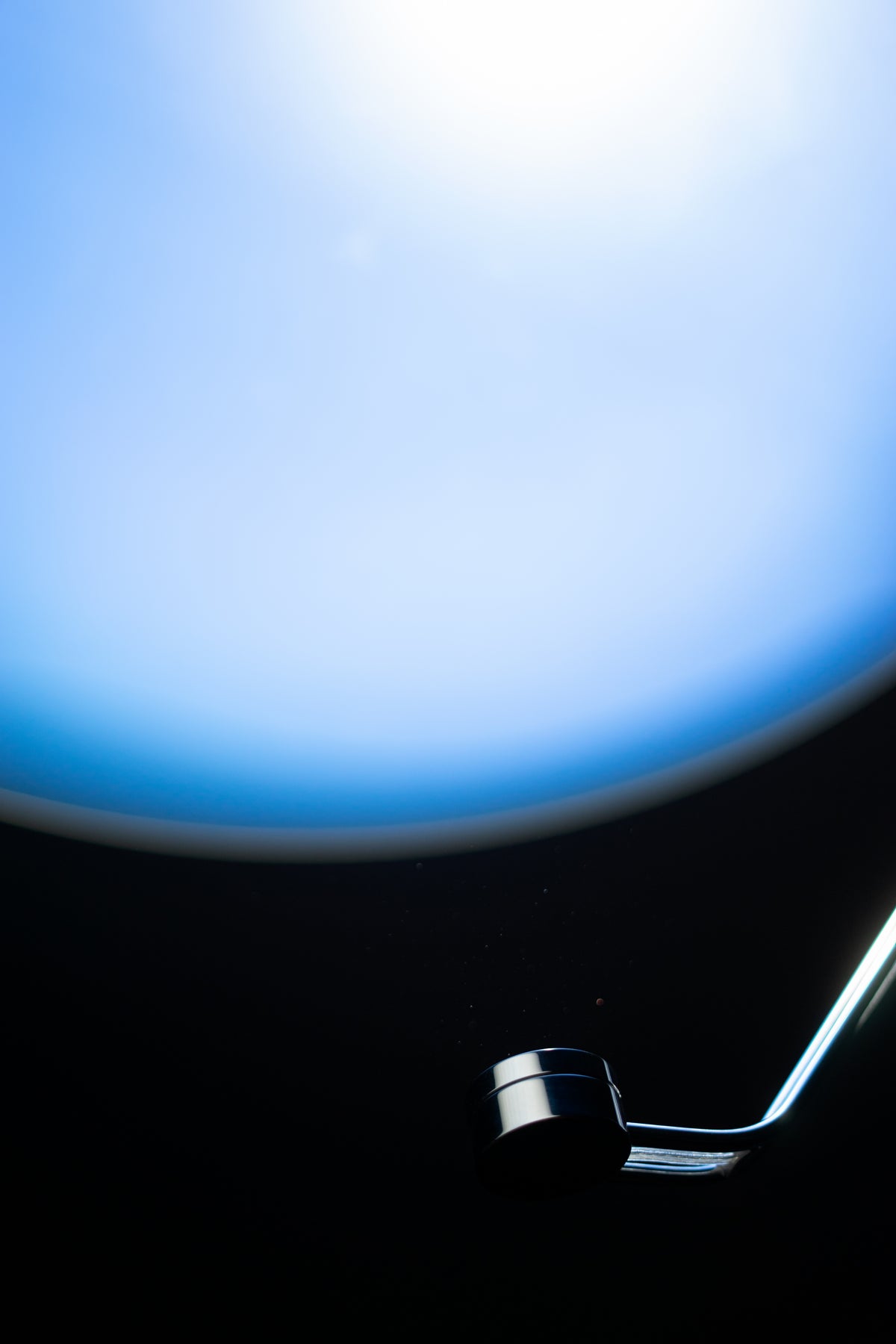
Your body clock
The average human body clock runs a little over 24 hours, about 24 hours 10 minutes [1]. Left alone, it drifts slightly later every day. Morning light is the strongest signal the body uses to pull you back each day.
Light reaches your body clock through special cells in your eye called intrinsically photosensitive retinal ganglion cells (ipRGCs). They're separate from the rods and cones you see with, and they're what tell your body what time it is [2].
Indoor vs outdoor
And your home is likely nowhere near bright enough. Our eyes adjust well, so the difference between outside and indoor light isn’t as noticeable visually.
But our body clock responds to actual brightness, not to how bright a room looks.
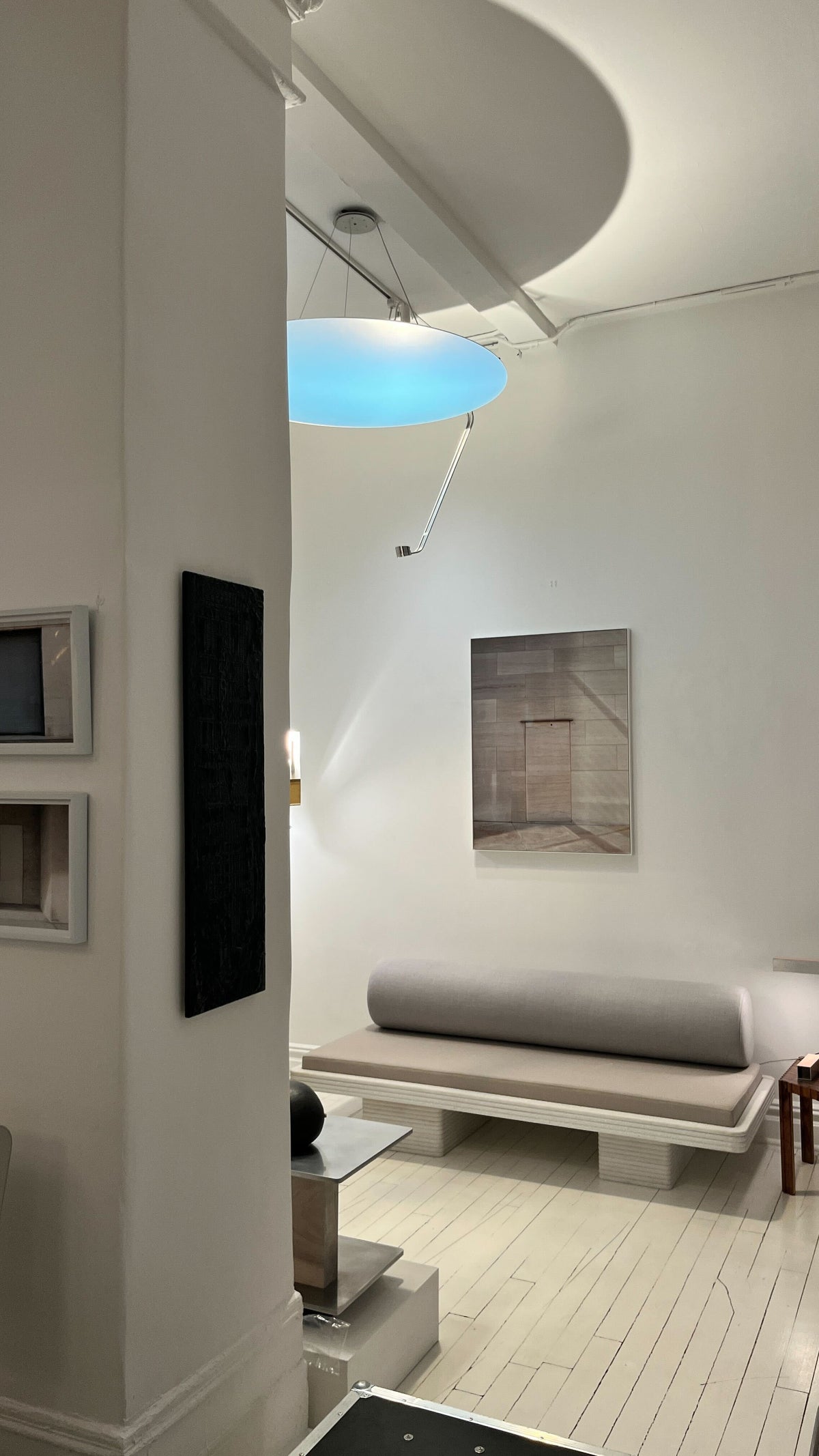
Jet lag
Many of us know the feeling of jet lag from a long-haul flight. This is an extreme example of being out of sync with your body’s circadian rhythm. The reality is, many of us are living in a milder form of jet lag every day, as we don’t get the bright light signal our bodies need at the start of each day.
Bright light is one of the most effective ways to improve jet lag recovery, with research showing it can halve the recovery time. Light in the morning moves your clock earlier; light late in the evening pushes it later [3].
The research
Decades of research have shown the impact of bright light on sleep, alertness and mood.
Bright light earlier in the day helps you feel tired at bedtime [3].
Bright daytime light reduces tiredness and improves reaction times [4]. Light as bright as a cloudy day can double the alerting effect of a well-lit office [5].
More daytime light is linked to a lower risk of depression, and more light at night to a higher risk [6].
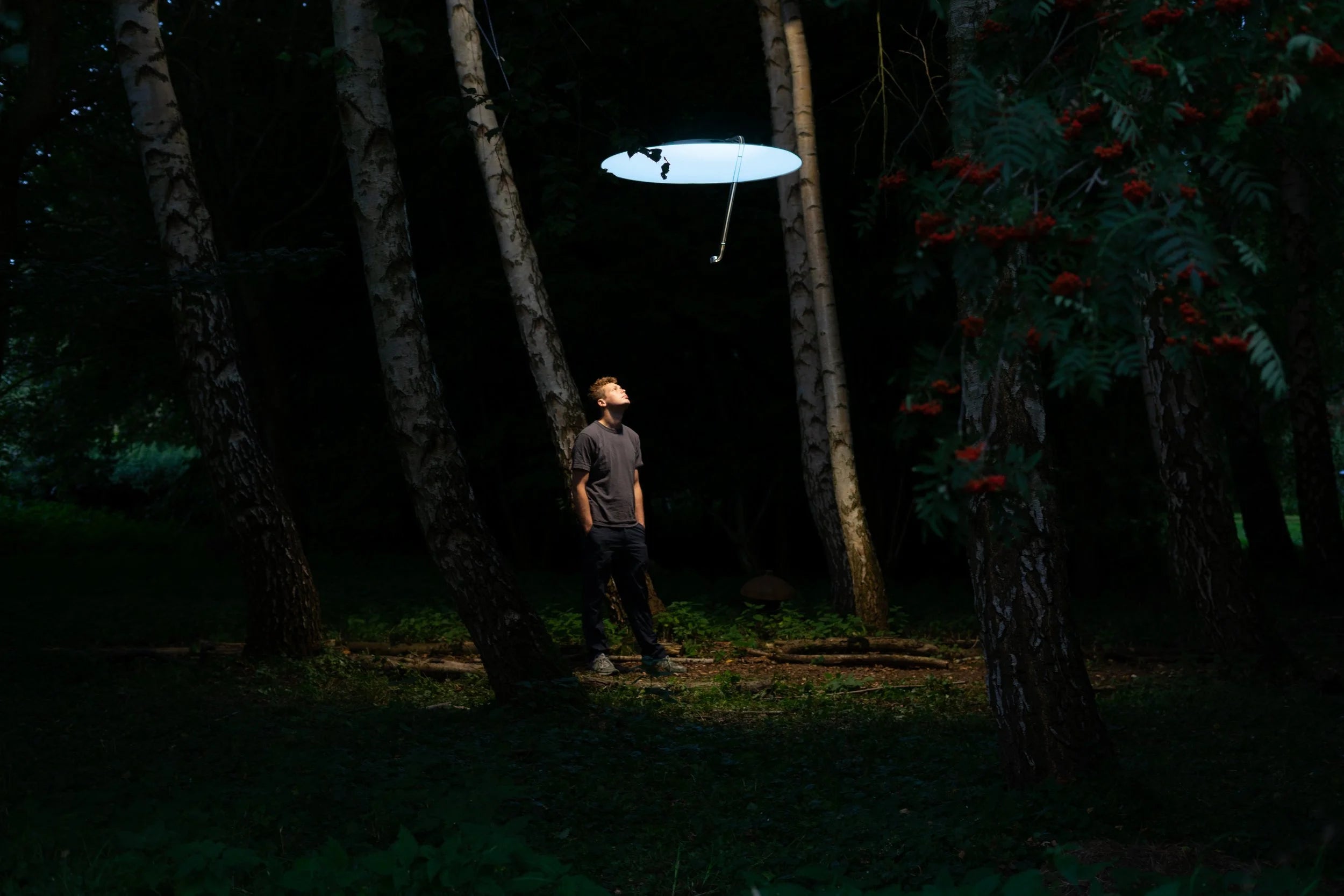
Bright light therapy
Bright light therapy has been used for winter depression for over 40 years and is one of the best-studied treatments for it [7]. In a head-to-head trial, half an hour of bright morning light worked as well as Prozac [8]. The trials, the doses and the caveats are in our guide to light therapy for SAD.
Every winter, the days in London shrink by nearly nine hours from their summer length, and most of us spend the few bright hours indoors.
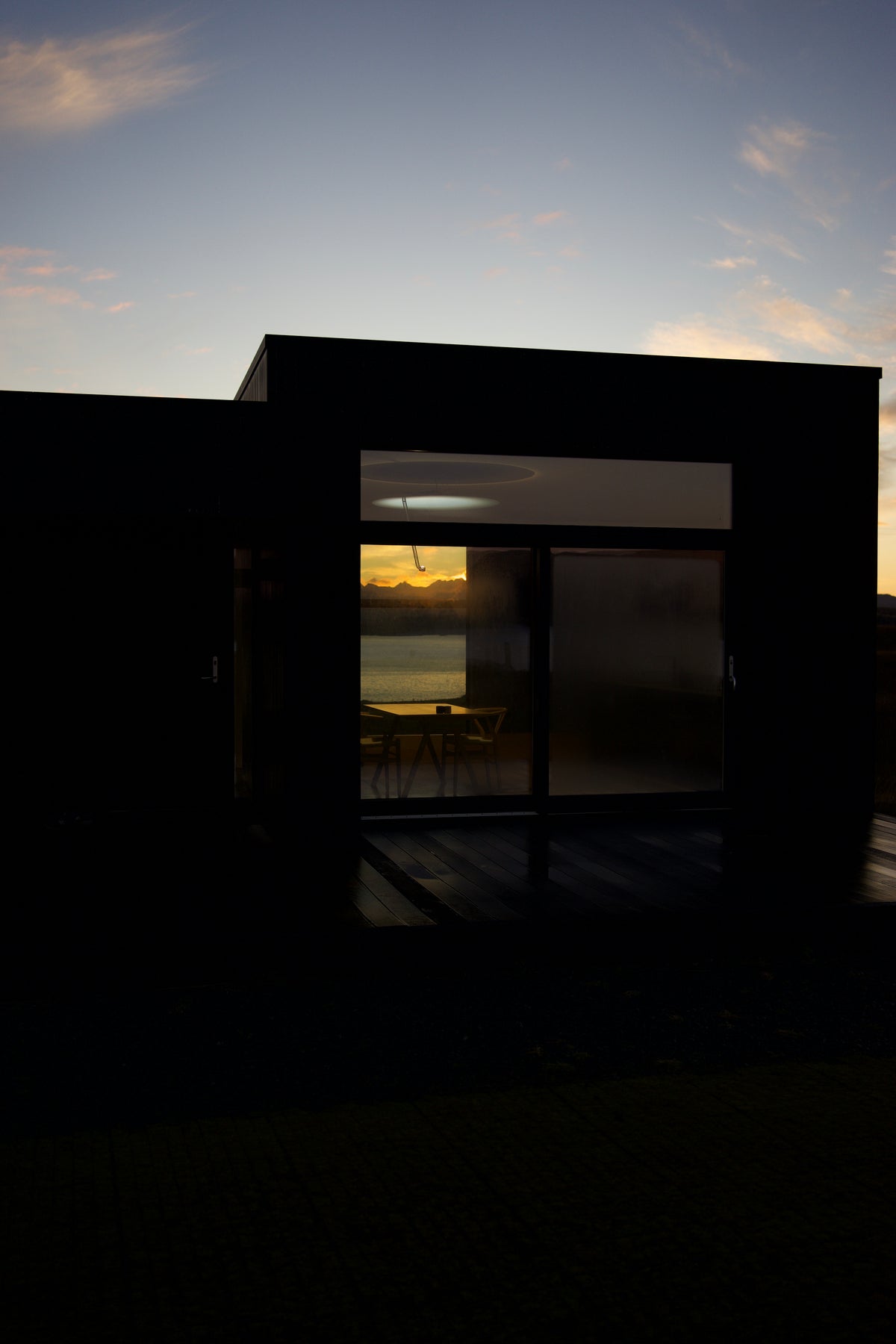
Emerging research
Emerging research shows that people with ADHD tend to run on a later body clock, and bright morning light is what moves it earlier [9, 10]. Light therapy has also helped people with depression outside winter [11].
We've seen this first hand from many customers with ADHD who find the Sunday Light transformative.
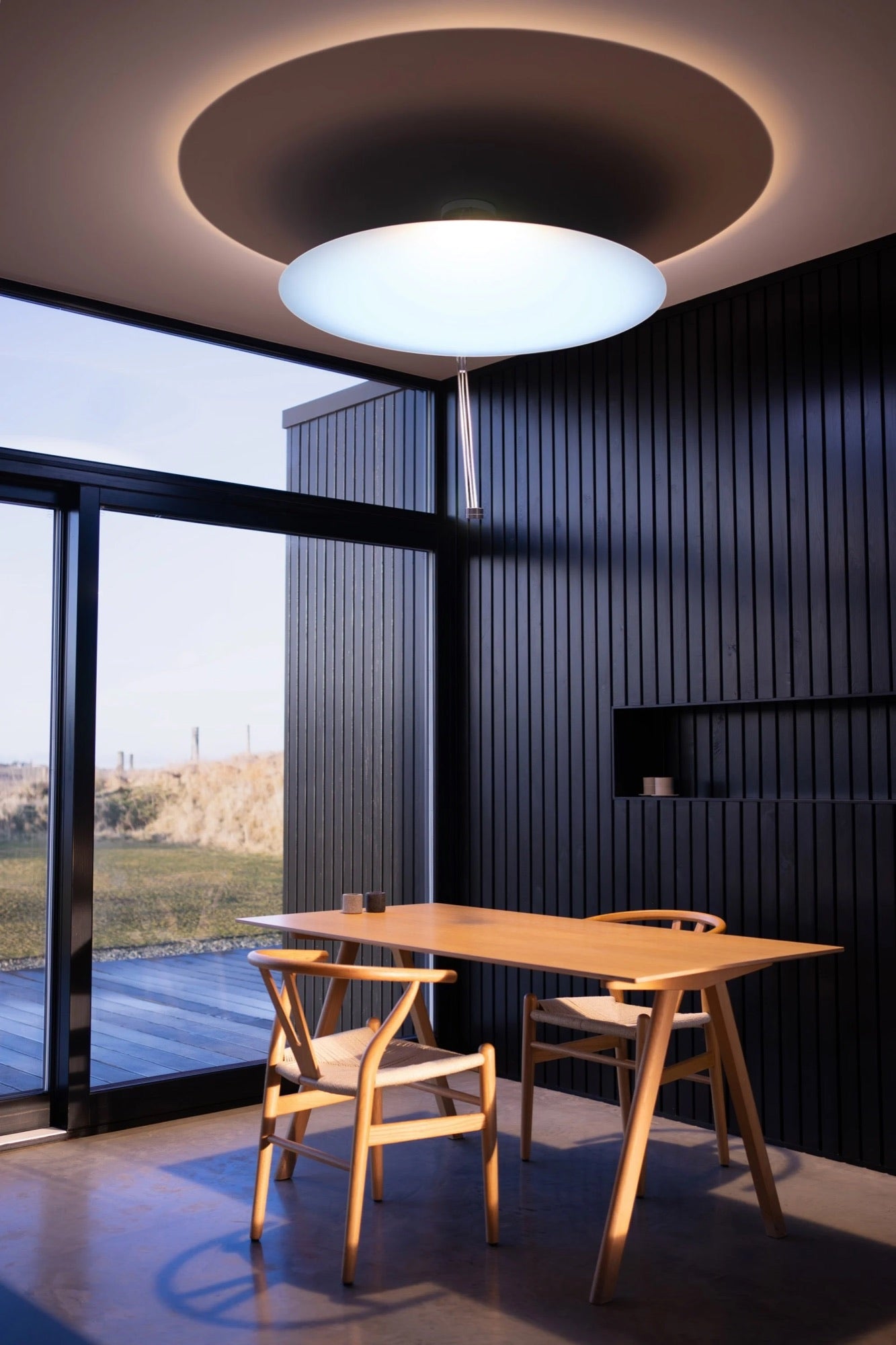
Timing
The specialised cells in your eyes contain a pigment called melanopsin, which responds most to blue light, around 480 nanometres [2].
This means that in the morning, your body needs a bright, cooler light for its circadian rhythm. Late at night, this form of light would tell your body it's still daytime, which is why you need to minimise blue light in the evening.
The numbers
For everyday health, experts now recommend at least 250 melanopic lux at your eyes throughout the day [12].
Bright light therapy uses 10,000 lux for 20 to 30 minutes each morning, and half the brightness takes roughly twice as long. Melanopic lux measures how strongly light reaches your body clock, not how bright it looks.
Most homes are lit for seeing, not for your circadian rhythm. Even four to six "daylight" bulbs in a living room give you only 100 to 300 lux at eye level.
Current solutions
Sunday is designed to fill this gap: high-quality, bright light that has both a physiological effect, and feels like sunlight.
The research is clear. But it is a small box you sit in front of for half an hour a day. Because it feels like a device, adherence is low, and it does nothing to change the room you actually live in.
Get the colour right, but the brightness is far too low to have an impact on circadian rhythm.
Beautiful, but expensive, built into the ceiling, and often nowhere near bright enough to have the effects of bright light.

Director, Sleep and Circadian Neuroscience Institute, University of Oxford
I was incredibly impressed by the Sunday Light. It produces a level and quality of light that approximates sunlight, yet its design allows prolonged use that is both comfortable and convenient.
Critically, you do not have to sit next to the device to get the levels of light that will deliver physiological benefits.
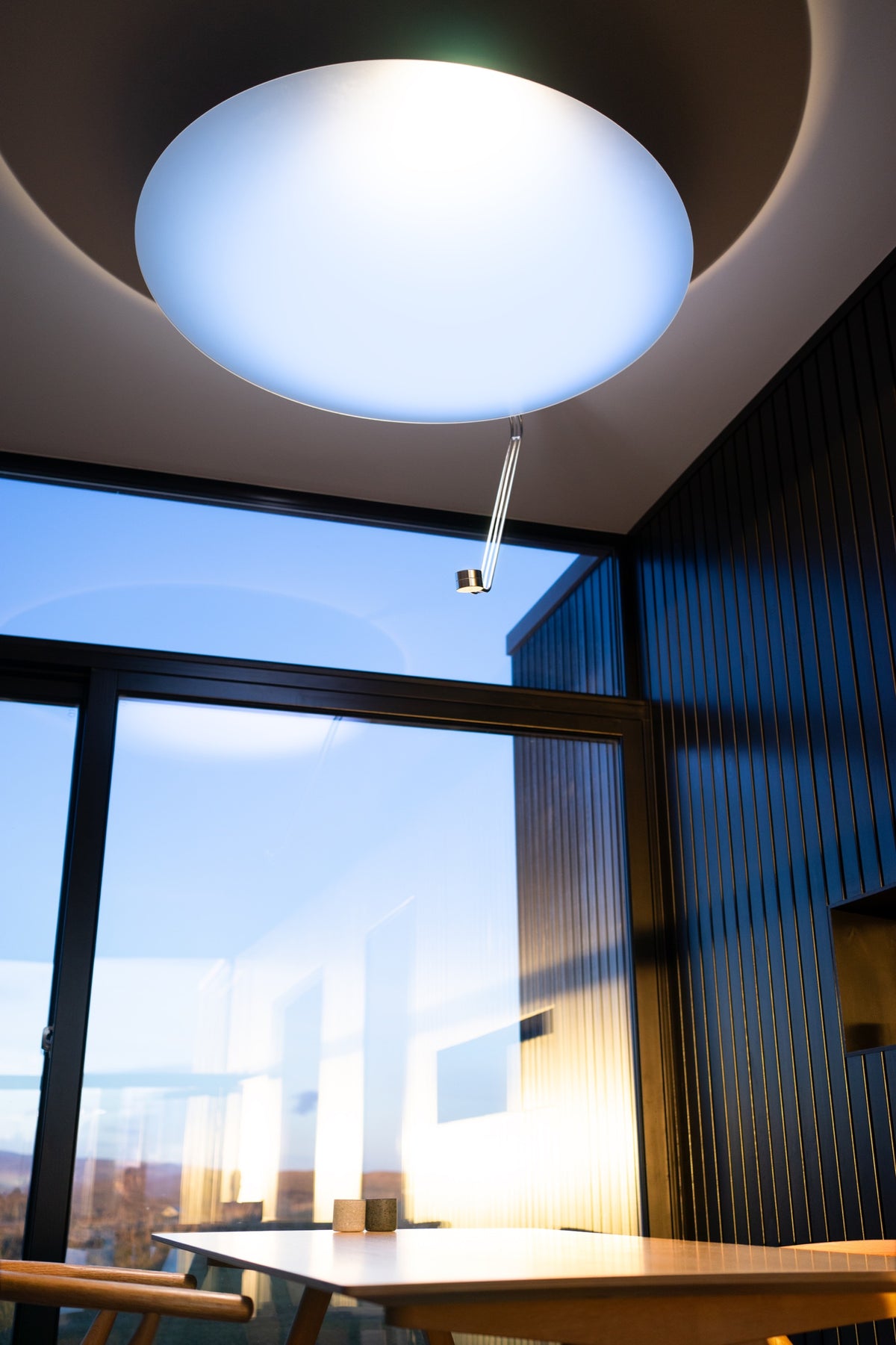
We wanted to build the feeling of a sunny day indoors, with the physiological effect sunlight has on circadian rhythm. Sunday looks just like the sky, and there is no other light like it for your health.
34,500 lumens (25 to 80 times a typical SAD lamp), reaches 10,000 lux at 60 cm and delivers more than eight times the 250 melanopic lux daytime target.
Sunday follows the sun, from cool, bright 6000K in the morning to warm 2650K in the evening, dimming below 1%. Set your schedule once and it runs itself each day.
Full-spectrum light with a CRI of 97+, so colours look as they do outside.
"Circadian health is a universal issue, and this is the first product we've seen that can scale a real solution."Matt Kaufman, Collaborative Fund
References